
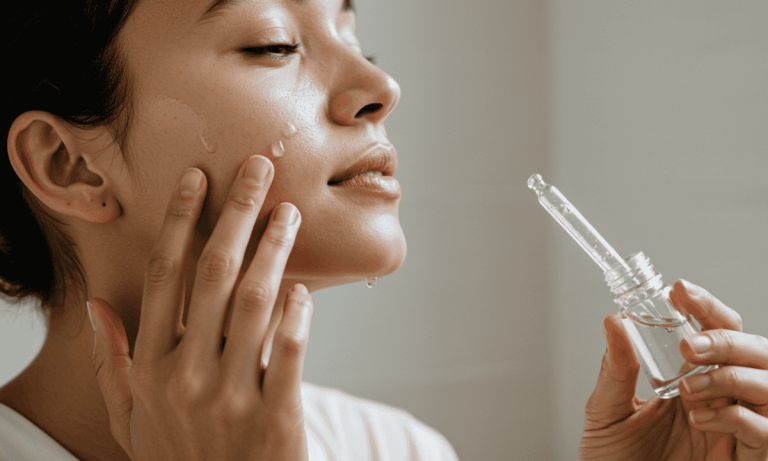

A good skincare routine is not only about beauty, but also about self-care and the health of the skin. There are myriad products available in the market and numerous ways of applying them online, and it is not surprising to know the right sequence of skincare products and their application. The only difference is that it is not as difficult as it sounds to develop a routine when you are aware of the steps of a skincare routine and tailor the routine to your skin type.
This article divides the key steps for a skincare routine and reasons why each step is important, as well as how you can tailor it to the unique needs of your skin. Whether you are oily, dry, sensitive, or a combination of both, this guide will help you have the confidence to have a healthy, radiant glow.
Why a Skincare Routine Matters
A recommended second skincare regimen is a skincare routine that functions as skin training. Skin is the largest organ in the body that is always exposed to the sun, pollution, and stress. Disregarding good care can speed up aging, lead to eruption, or instigate sensitivity. When you observe a routine in order to apply your skincare regimen, you know that your skin receives the nutrients, hydration, and protection it requires daily.
The question many will ask is, is bubble skincare effective with children? Trendy products may appear to be fun, but the skin of children is very sensitive, and it is better to use simple cleansers and moisturisers. This brings out the importance of age and skin type customisation of routines. [1]
Understanding Different Skin Types
It is necessary to be aware of my own skin type before immersing in the steps of a skincare routine. Making the wrong product decisions may be more destructive than constructive.
- Dry Skin: It is hard, dry, and scaly, and requires abundant moisturization.
- Combination Skin: T-zone (forehead, nose, chin) is oily, the rest of the body is dry.
- Sensitive Skin: Easily sensitive, must use weak fragrance-free products.
- Normal Skin: Not too difficult, but still should be taken care of.
Being aware of your skin type will help you know in what order to apply the skincare products to make sure that it is beneficial to your complexion. [4] [2] [5]
Steps for a Skincare Routine
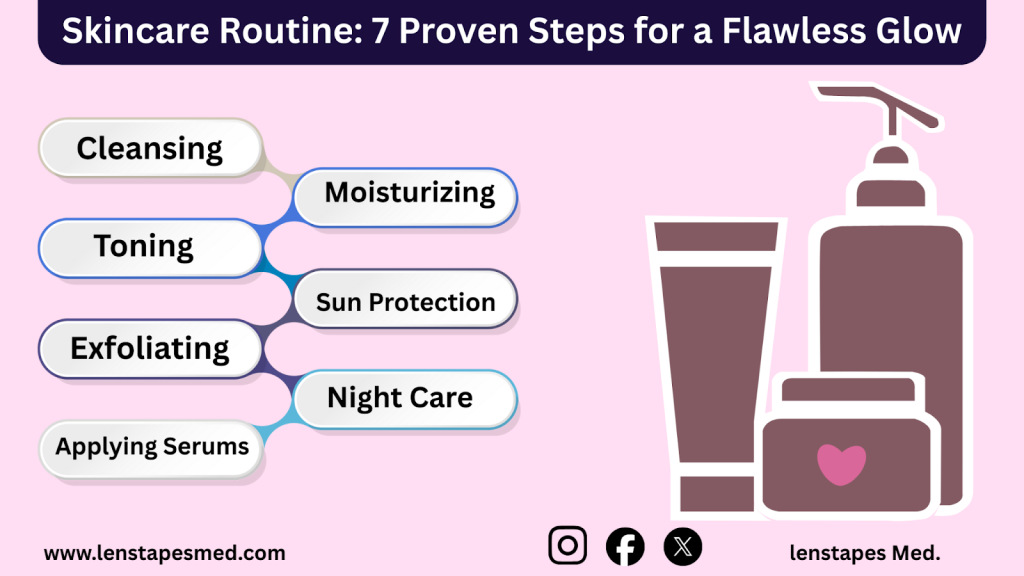
Not all routines would fit each individual, yet dermatologists concur on a rudimentary structure. To follow the seven steps for a skincare routine, which can be tailored to your requirements, let’s go through them.
Step 1: Cleansing
Cleansing is the basis of any skincare routine. The skin is rather dirty, oily, sweaty, and polluted on a day-by-day basis. Other products can not work effectively without appropriate cleansing.
Select a mild cleaning solution that can be used on your skin. In case of having skincare for sensitive skin, use formulas that are fragrance-free and hydrating. Foaming or gel cleansers are good for those whose skin is oily. To achieve clear, healthy skin, it is important to wash your skin twice a day, in the morning and at night.
Step 2: Toning
Toning is the second step in the skincare routine. A toner will assist in getting rid of residual impurities, and it will normalize the skin pH. The toners today are not merely alcohol-based liquids but are usually enriched with comforting and moisturizing elements.
To the fans of pov skincare who love to share their daily routine, toners will add beauty to their lives, but will have actual skin benefits. The ingredients such as witch hazel, put down oil production, and the rose water cool down dry and fatigued skin.
Step 3: Exfoliating
Exfoliation may not be done, yet it is one of the most life-changing processes in a skincare routine. The skin cells that are dead accumulate, resulting in dullness and blocked pores. Taking a shower with the help of chemical exfoliants (such as AHAs or BHAs) or soft scrubs two to three times a week shows fresh, glowing skin.
To those who want to discover proven skincare, exfoliation has been scientifically proven to improve texture and prevent acne. Nevertheless, delicate types of skin must do it stepwise in order not to irritate the skin.
Step 4: Applying Serums
Serums are condensed preparations full of working ingredients. The step in your skincare routine will help you to address a particular issue, be it acne, pigmentation, fine lines, or dullness.
Vitamin C serum makes the skin bright and fights against free radicals. Hyaluronic acid is a profoundly moisturizing acid. Niacinamide manages the oils and fortifies the skin barrier. It is best to have serums tailored to the needs of your skin in order to achieve maximum results.
Step 5: Moisturizing
Moisturizer is an essential requirement in any skincare routine. No matter what type of skin, one will need hydration. An effective moisturizer seals the effects of the serum and stops the water loss.
Gel-based moisturizers are suitable for oily skin, and creams are suitable for dry skin. In case you have sensitive skin, you should find soothing ingredients, such as aloe vera or ceramides. It is important to keep in mind that moisturizers are not luxuries, but they are the staple of every routine.
Step 6: Sun Protection
Unless you use sunscreen, the rest of your skincare routine is ineffective. Sunscreen protects your skin against UV rays, which lead to premature aging, pigmentation, and even skin cancer.
Dermatologists are demanding the use of broad-spectrum SPF 30 or above every day, even indoors. This is especially important when you have dark skin because most people do not realize that they are getting sun damage, even when they are not.
Step 7: Night Care
Your skin is also regenerating at night, and so the bedtime rituals are effective. The same procedure should be performed with steps for a skincare routine, such as cleanse, tone, serum, and moisturize, and this will prepare your skin to regenerate. It can be supplemented with oil nourishing or overnight masks to add an extra amount of hydration.
It is also at that point that treatment such as retinol works best. Retinol enhances the production of collagen, minimizes wrinkles, and smooths out the skin tone. Sensitive skin types should, however, introduce it slowly. [1] [2]
Personalizing Your Skincare Routine
Everyone’s skin is unique. Although the seven steps for a skincare routine make a strong foundation, it is where personalization is that you see good results. In case of the acne-prone skin, it is better to concentrate on non-comedogenic lightweight products. With adult skin, it is important to use anti-aging products and thicker moisturizers.
Routine is also affected by lifestyle. Most people are not aware of the impact of stress, sleep, and diet on their skin. Regular use of skincare products and healthy living results in permanent radiance.
Common Mistakes to Avoid (and What to Do Instead)
1. Over-exfoliating – This can damage the skin barrier.
Instead: Exfoliate 1–2 times a week with a gentle product suitable for your skin type.
2. Using too many products at once – Overloading your skin may cause irritation and confusion.
Instead: Stick to a simple routine with a cleanser, moisturizer, and sunscreen, then add extras gradually if needed.
3. Skipping sunscreen – Going without SPF speeds up premature aging and increases sun damage.
Instead: Apply sunscreen daily, even on cloudy days or indoors.
4. Blindly following skincare trends – Not all popular products will suit your skin type.
Instead: Research ingredients and consider your skin’s needs before trying new trends.
5. Assuming popular products work for everyone – For example, bubble masks may be fun but aren’t safe or effective for all skin types.
Instead: Patch-test new products and consult a dermatologist if unsure.
Conclusion
A shining skin does not come together in a single day but with practice. The nighttime routine of skincare (following the necessary steps to care about the skin: cleansing, toning, exfoliating, using serums, moisturizing, applying sunscreen, and protecting the skin at night) provides a baseline of skin health.
The magic with a skincare routine is that it is flexible. It is possible to have perfect skin with proven skin care techniques, careful choice of products, and a personal approach to every customer to help them achieve their ideal skin. Keep in mind that skincare is not about looks; it is a lifetime investment in your health.
FAQs
1. What is the correct order of skincare products?
The correct order is cleanser, toner, exfoliant (twice or three times weekly), serum, moisturizer, and sunscreen in the morning. At night, replace sunscreen with nourishing treatments.
2. Can I skip toner in my skincare routine?
Yes, but toners enhance hydration and help balance pH, making other products work more effectively.
3. How do I know if my skincare routine is working?
Your skin should feel balanced, hydrated, and clear. Improvements, such as fewer breakouts or a brighter tone, indicate success.
4. Is bubble skincare good for kids?
No, kids should stick to simple cleansers and moisturizers since their skin is more delicate and prone to irritation.
5. What does oily skin feel like on dark skin skincare?
It feels greasy, thicker in texture, and often comes with enlarged pores and a shiny appearance, especially in the T-zone.
References
Details
1.National Institutes of Health. Keep Your Skin Healthy. NIH News in Health. 2015. Available from: https://newsinhealth.nih.gov/2015/11/keep-your-skin-healthy
2. National Institute on Aging. Skin Care and Aging. National Institutes of Health. 2021. Available from: https://www.nia.nih.gov/health/skin-care/skin-care-and-aging
3. Draelos ZD. The role of skin care as an integral component in dermatologic health. J Clin Aesthet Dermatol. 2010;3(10):22-30. Available from: https://pmc.ncbi.nlm.nih.gov/articles/PMC3997205/
4. U.S. Food and Drug Administration. Your Skin. FDA. 2020. Available from: https://www.fda.gov/radiation-emitting-products/tanning/your-skin
5.Draelos ZD. Skincare bootcamp: The evolving role of skincare. J Drugs Dermatol. 2016;15(1 Suppl 1):s47-s50. Available from: https://pmc.ncbi.nlm.nih.gov/articles/PMC5172479/
6. Hwang J, et al. Facial skincare routine adherence in the general population: impact on skin hydration and microbiome. Dermatol Ther (Heidelb). 2024;14(2):451-462. Available from: https://pmc.ncbi.nlm.nih.gov/articles/PMC11735236/
7. National Institute of Environmental Health Sciences. Cosmetics and Your Health. NIEHS. 2022. Available from: https://www.niehs.nih.gov/health/topics/agents/cosmetics